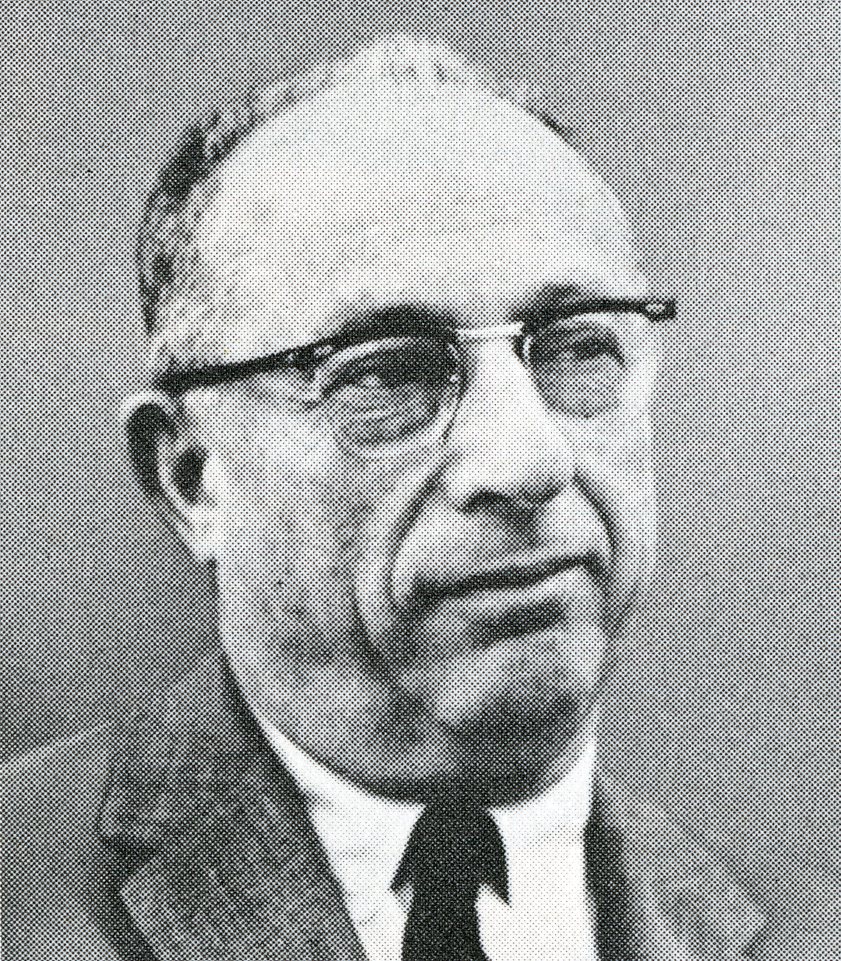
“The history of religion presents a sorry spectacle.” October 26, 1969 In addressing what he called the Christian-Jewish encounter in 1969, Rabbi Olan walked a fine line between righteous indignation and even-handedness. On the one …
-
-

The Christian-Jewish Encounter
-
Religion–The Experience of Life’s Wholeness
“Men and women today live in an imbalance. Our emphasis is upon the practical, the rational, the logical. We are alien to the world which can be known only by experience, by feeling…. There is …
-
The Moon and I
“The phenomenal achievement of the human mind exhibited in the journey to the moon illuminates in shining brightness the sickness of the human condition.” On July 21, 1969, Neil Armstrong became the first person to …
-
Modern Man’s Need for Prayer
“Can prayer have any meaning at all for a modern person? If it cannot ask God to set aside the laws of nature and perform a miracle, and if it is not aimed at changing …
-
On Being Given Another Chance
“If we could live our lives all over again, what changes would we make? How differently would we do things from what we did in the past?” December 28, 1969 found Rabbi Olan in a …
-
War Is Always Immoral
“If there is no justice, there can be no peace.” In this sermon, Rabbi Olan wrestles with an intractable problem: he believes that all wars are immoral, but that some wars are also just or …
-
To Live With a Mission
“Those who know their mission and work earnestly to fulfill it are really alive.” In this sermon, delivered on March 16, 1969, Rabbi Olan, the preacher, turns preaching on its head, and says that it …
-
Each [person]
-
Building God’s Houses
“This preacher stands in one of the most beautiful of Sanctuaries in a city where twenty percent of the houses of the poor have been officially condemned as unfit for human habitation. How can any …
-
The Sin of Hypocrisy
“We suffer terribly from Sunday words and Monday actions.” In this sermon, delivered on February 23, 1969, Rabbi Olan identifies the Ten Commandments as principles “binding at all times and in all places.” He distinguishes …
 Rabbi Levi A. Olan: The Conscience of the City