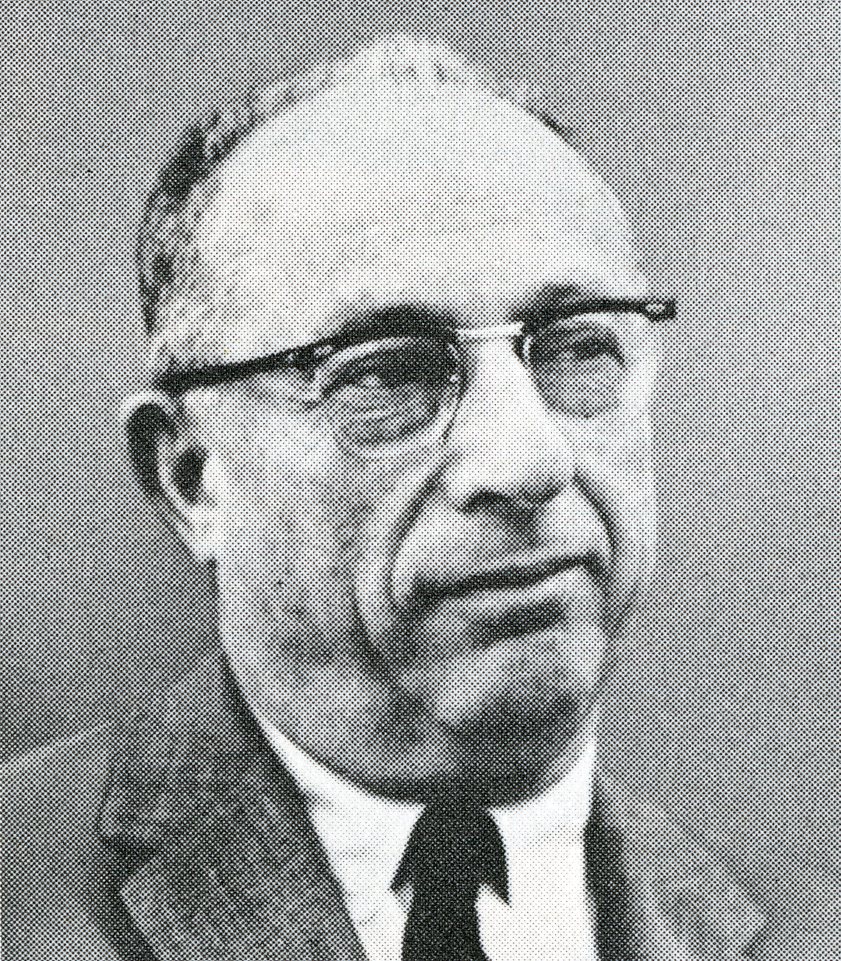
I am one of four people who addressed Rabbi Olan as Papa – because he was my grandfather. When I was growing up in Dallas during the 1960s and 1970s – going to religious school …
-
-

Reflections
-
Two Thrones
This is the first of a series of personal reflections on our encounters with Rabbi Olan’s thought, by the curators of Conscience of the City.
One of Rabbi Olan’s most powerful images, introduced in ‘On Legislating Morality’ (delivered November 29, 1964) and developed in ‘The Test of Love’ (delivered January 4, 1970), is that God has two thrones: the throne of law (mitzvah) and the throne of mercy (chesed). If we can substitute justice (tzedeq) for law, we get one of Rabbi Olan’s favorite injunctions, taken from the Book of Micah 6.8: ‘It hath been told thee, 0 man,what is good, and what the Lord doth require of thee, only to do justly, to love mercy, and to walk humbly with thy God.’
We need both thrones because we require the structure of law, but law alone would condemn us all, because for Rabbi Olan, we are all sinners (‘We Are All Guilty’, delivered October 15, 1961). At the same time, he feared that mercy alone would leave us without any guidance or direction; his name for that was ‘anarchy’ (‘Justice Comes First’, delivered November 19, 1961; repeated in ‘The Test of Love’). On a personal note, when I was teaching psychology graduate students about healthy child development, I emphasized that children need both structure and love—law and mercy.
Rabbi Olan’s universe is one in dynamic tension, in which law and mercy complement each other and make a whole. It is central to an understanding of Rabbi Olan’s theology that he says (in ‘The Test of Love’) that ‘God must find the harmony between justice and love’ (emphasis added). His God is active in the universe, and invites us to be partners in bringing justice to it.
Where did Rabbi Olan get the image of the two thrones? They are not mentioned directly in Scripture. However, there are enough passages in which justice and a throne, mercy and a throne, and justice and mercy, appear together that it would have been easy for Rabbi Olan to have created the metaphor from them. Those passages include:
Psalms 9:4 For thou hast maintained my right and my cause; thou satest in the throne judging right.
Psalms 89:14 Justice and judgment are the habitation of thy throne; mercy and truth shall go before thee.
Proverbs 20:28 Mercy and truth preserve the king; and his throne is upholden by mercy.
Isaiah 16:5 In mercy the throne will be established; and One will sit on it in truth, in the tabernacle of David, judging and seeking justice and hastening righteousness.
Further, it is striking to compare the thrones of law and mercy with the description of the Ark of the Covenant in Exodus and much later, as developed by the Apostle Paul is his letter to the Hebrews. The Ark is of course the container of the law, since it contains the two stone tablets upon which the Ten Commandments are inscribed. (Early Christian tradition [Hebrews 9:4] says that it also contains a sample of manna, the food with which the Hebrews were sustained during the Exodus, and Aaron’s rod which miraculously blossomed even though it was dead wood.)
The solid gold cover of the Ark, kaporet in Hebrew (Exodus 25:17 and following), was decorated with two golden cherubim,[1] and was identified as the place where God promised to meet with Moses:
22 And there I will meet with thee, and I will speak with thee from above the ark-cover, from between the two cherubim which are upon the ark of the testimony, of all things which I will give thee in commandment unto the children of Israel.
In Exodus, what God communicates to Moses from the place above the ark cover is still
law, commandments. However, in the centuries between Exodus and Hebrews, kaporet acquired a new significance. It was translated into demotic Greek as ἵλαστήριον hīlastērion, which means ‘that which appeases a god or atones for sin’. This was in turn translated into the Latin of the Vulgate as propitiatorium, the source of our word propitiate. But in the King James Bible (Hebrews 9:5), the word is translated ‘mercy seat’.
What I find fascinating is that in Greek and Latin, the emphasis is on our atoning for our sins and appeasing an angry God. However, for Rabbi Olan and for the translators of the King James Bible, God uses the seat above the kaporet to dispense mercy, not to receive appeasement.
This is consistent with one of Rabbi Olan’s most important teachings: that our relationship with God is not one of servants to master, but rather of coworkers in the great project of tikkun olam, the healing of the world.
***by Lionel S. Joseph***
[1] How this squares with the prohibition against making graven images is not explained.
-
A False Kind of Prosperity
‘The first plank in any platform for economic well-being is justice.’ April 19, 1970 In this, one of his last radio sermons, Rabbi Olan addresses three themes: Rabbi Olan argues that without fair distribution, our …
-
From ‘A False Kind of Prosperity’
“You say that you are a religious person, that you believe in God. Is He the God of justice whose laws are commands upon you? If He is God then His will must be spoken where men live, in the market place, in the factory, in the slums, in the palaces, in the Halls of Congress, in the Courts.”
– Rabbi Levi A. Olan. Broadcast April 19, 1970
-
Being Happy in this Kind of World
“Our generation should be the happiest in history. It is the most miserable.” March 22, 1970 On Purim in 1970, Rabbi Olan reflected on that time in the Jewish calendar that is supposed to be …
-
All Problems Begin With Me
“All the religious teaching in the world is of no avail unless a man’s action is worthy of imitation by his child.” Rabbi Olan’s theme in this sermon, delivered on March 29, 1970 (and one …
-
The Power to Stay With It
“The important thing about our lives is not how we begin, but how much power we have to stay with it until the end.” April 12, 1970 In this sermon, Rabbi Olan identifies a set …
-
On Finding God
‘To stake everything on… moments of faith is to inject into our blood stream zeal, ardor, joy, and hope.’ March 8, 1970 Rabbi Olan begins with the observation that ‘God’ means different things to different …
-
I Knew You When
“The danger to any people is when it confuses itself with God. America with its affluence, its power, is becoming so arrogant that it has replaced God. Our fathers asked, ‘What doth the Lord require …
-
The Miracle of Miracles
“The miracle of all miracles is the will and spirit of [humanity].” Rabbi Olan sets the stage for his sermon on miracles (delivered on February 15, 1970) by recounting the greatest miracle in the history …
 Rabbi Levi A. Olan: The Conscience of the City